When the Flock Crosses the Line: Livestock Trespass, Psychoactive Pasture Plants, and the Legal Vacuum After a Toxicosis
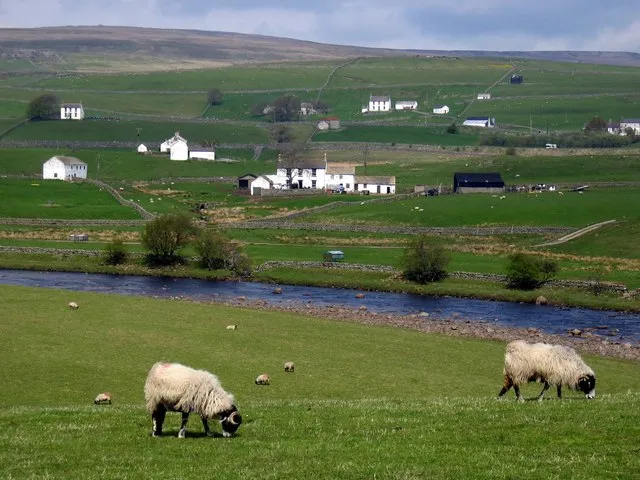
Photo: Andrew Curtis, CC BY-SA 2.0, via Wikimedia Commons
A Ewe That Shouldn't Have Been Sick
The case record reads like a riddle. A flock of mixed-breed sheep, managed on a small Vermont homestead with perimeter fencing the owner described as "mostly adequate," escapes through a downed corner post. Several hours later, three ewes return with dilated pupils, ataxia, and tremoring. The attending veterinarian's differential list included the usual pasture culprits — white snakeroot, bracken fern, remedying ergot — but the eventual suspicion fell on something stranger: a patch of discarded plant material from a neighboring property's outdoor cultivation area, dumped at the wood line.
Cases like this rarely reach the literature. They surface instead in practitioner anecdotes, state veterinary diagnostic laboratory submissions, and the occasional insurance claim file. Yet they sit at the intersection of two fields that almost never talk to each other: veterinary toxicology and agricultural property law.
What the Toxicology Actually Shows
Ruminants are not small animals with four stomachs; they are metabolically distinct patients whose handling of serotonergic and tropane-containing botanicals differs substantially from monogastric species. Ruminal retention time can prolong exposure to ingested alkaloids, and the clinical presentation in sheep — head-pressing, aimless wandering, dramatic ataxia — has historically been misattributed to polioencephalomalacia, lead, or clostridial disease when the true exposure was an entheogenic or psychoactive plant.
The diagnostic gap compounds the legal one. Without confirmatory analytical work — mass spectrometry on rumen contents or retained feed samples — the causal chain that any liability claim would require simply does not exist on paper. A dead ewe with nonspecific necropsy findings is a write-off; a dead ewe with confirmed alkaloid exposure and a documented source is a lawsuit.
Fencing Statutes Meet Plant Chemistry
American livestock law is a patchwork. Western states, shaped by open-range tradition, often place the burden on landowners who want livestock off their property to fence it out. Eastern and Midwestern states generally follow a fence-in philosophy, making the livestock owner liable for trespass damage. Roughly half the states have drifted toward a middle position — sometimes called a "fencing-in/fencing-out hybrid" — where local custom and county-level records determine the default.
The complication in a psychoactive-plant scenario is that the traditional remedy for trespass is crop damage: the neighbor's alfalfa eaten, the orchard bark stripped. But when the "damage" is to the trespassing animals themselves — a valuable breeding ewe lost to toxicosis — the doctrinal machinery stalls. Most fencing statutes contemplate harm flowing from the livestock, not to it. Whether a landowner who leaves discarded plant material accessible owes a duty of care to a neighbor's trespassing cattle is a question with almost no case law behind it.
A handful of comparative negligence and attractive-nuisance arguments could theoretically apply, but courts have never squarely addressed psychoactive botanicals as the hazard. The result is a scenario where both parties — the shepherd who under-fenced and the neighbor who composted grow waste at the property line — share an uncomfortable legal silence.
The Insurance Adjuster's Problem
Livestock mortality policies and farm liability riders are written with predictable perils in mind: lightning, bloat, predation, hardware disease. Psychoactive plant toxicosis appears nowhere in standard policy language. Adjusters confronted with a claim must decide whether the loss falls under accidental death, owner negligence, or an exclusion for "ingestion of harmful substances" — language drafted with antifreeze and lead batteries in mind, not Psilocybe mulch or discarded brugmansia clippings.
Practitioners who work livestock in rural counties report that these claims are usually settled informally, if at all, because neither side can afford the analytical costs of proving causation. The economics favor silence, and silence favors the epidemiological blind spot this publication has documented elsewhere.
What Veterinarians Can Do Now
Until the law catches up, the clinical record is the only durable artifact. Veterinarians handling suspect toxicoses in grazing animals should:
- Collect and freeze rumen contents, suspect plant material, and serum before necropsy.
- Document the fence line, including photographs of any adjacent cultivation or dumping sites, with the owner's consent.
- Submit samples to a regional diagnostic laboratory with a specific request for alkaloid screening, not just a general toxicology panel.
- Record the herd history of fence integrity and prior escapes, which will matter enormously if a claim or dispute follows.
An Unwritten Chapter
The stoned sheep at the property line is more than an anecdote. It is a test case that hasn't been run — a scenario where animal welfare, property law, and the quiet spread of psychoactive botany across rural America converge. Veterinary medicine should be generating the case reports now, so that when the first litigated loss arrives, the clinical foundation already exists.