Improvised Protocols and Empty Textbooks: Inside the Exotic Animal Clinic's Psychedelic Data Gap
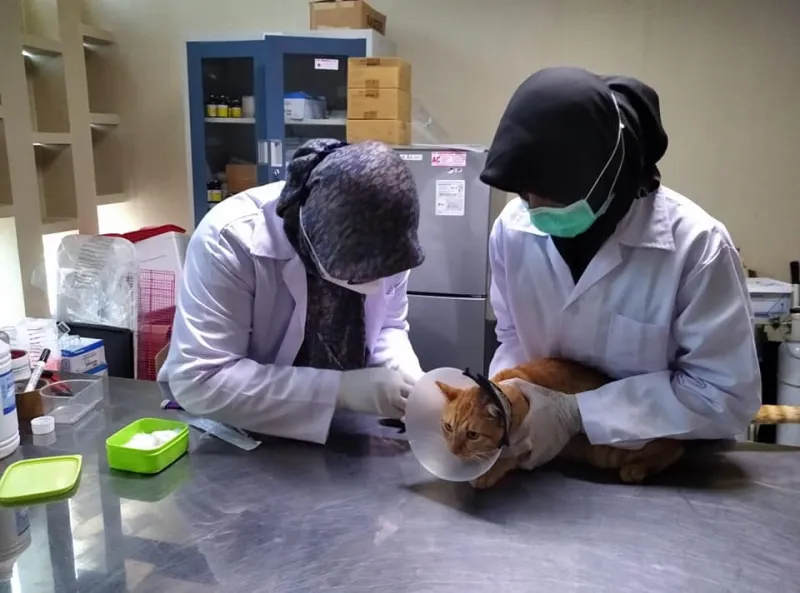
Photo: en:Government of Indonesia, Public domain, via Wikimedia Commons
When a dog presents at a general practice after ingesting a suspected psychedelic mushroom, the clinician has options: reference dosages, established decontamination timelines, published case series, and a toxicology hotline staffed by people who have seen the scenario before. When a ferret presents with the same exposure, the playbook is blank.
This is the reality confronting America's exotic animal practitioners, a small and geographically dispersed specialty that has become, almost by accident, the frontline of serotonergic exposure medicine in species nobody has studied.
The Metabolic Mosaic
The core problem is phylogenetic distance. Dogs and cats are, pharmacologically speaking, reasonably well-mapped territory. Ferrets — obligate carnivores with unusually rapid gastrointestinal transit times — may clear ingested compounds before decontamination would even be attempted in a dog. Psittacines, with their avian xenobiotic metabolism and high body temperatures, handle serotonergic agents through pathways that bear little resemblance to mammalian models. Reptiles complicate things further: their metabolisms are temperature-dependent, meaning the same dose may behave differently in a boa kept at 85°F versus one housed at 72°F.
Yet the reference literature treats these species as a footnote. Standard veterinary toxicology texts devote pages to canine THC ingestion and macadamia nut toxicosis; serotonergic plant or compound exposure in an iguana might merit a sentence, if that.
Case-by-Case Improvisation
Practitioners interviewed for this article describe a clinical culture of educated improvisation. Without species-specific data, exotic vets extrapolate from avian and ferret formularies, lean on the ASPCA Animal Poison Control Center for general guidance, and monitor patients intensively rather than intervene pharmacologically — because the pharmacologic interventions themselves carry unknown risk.
Supportive care becomes the default. Temperature management, fluid support, and quiet, darkened housing substitute for receptor-targeted therapy, since drugs like cyproheptadine — a common choice for suspected serotonin syndrome in dogs — have no validated dosing in most exotic species. One practitioner described treating a suspected psilocybin exposure in an African grey parrot with "nothing but time and an oxygen cage," documenting the animal's 36-hour recovery in a spreadsheet she keeps privately because, in her words, "there's nowhere to send it."
That spreadsheet is the crux of the problem.
The Unindexed Archive
Exotic animal medicine in the United States is practiced by a few hundred board-certified specialists and a larger cohort of general practitioners who see exotics as a portion of their caseload. Their case logs — paper records, practice-management software entries, personal notes — collectively constitute a natural experiment that no one has aggregated. A ferret exposure in Oregon and a bearded dragon exposure in Florida are, today, entirely disconnected data points.
The infrastructure gap is structural rather than technological. Veterinary databases like the FDA's Center for Veterinary Medicine adverse event reporting system are oriented toward approved drugs, not incidental toxicoses. Species-specific journals publish the occasional case report, but there is no clearinghouse, no standardized reporting form, no incentive structure that would turn anecdote into dataset.
Compare this with human emergency medicine, where poison center networks capture every call and generate national surveillance data in near-real time. Veterinary toxicology in the exotic space has no equivalent — and the gap widens as entheogenic plant cultivation expands across US states, placing psychoactive species in closer proximity to households that keep reptiles, birds, and small mammals.
What Collection Could Yield
Aggregated case data from exotic practices would do more than fill a bibliographic hole. It would establish baseline pharmacokinetic assumptions — transit times, metabolic rates, observable clinical signs — that currently exist only as extrapolation. It would reveal whether certain taxa are at disproportionate risk, whether avian patients present with syndromes distinct from mammalian serotonin syndrome, and whether the supportive-care-first approach actually outperforms pharmacologic intervention.
It might also change triage behavior. Several practitioners admitted that owners of exposed exotic pets are sometimes told to "wait and watch" — advice that is defensible given the unknowns but is, at present, indistinguishable from guessing.
A modest intervention could begin the process: a standardized case-report template distributed through the Association of Exotic Mammal Veterinarians, the Association of Avian Veterinarians, and the Association of Reptilian and Amphibian Veterinarians, with deidentified submissions compiled annually. The precedent exists in other veterinary subspecialties; what has been missing is the recognition that these cases are occurring at all.
The Frontline Nobody Funded
There is a certain irony in the current arrangement. As psychedelic science attracts hundreds of millions of dollars in human clinical research investment, the veterinary practitioners most likely to encounter these compounds in patients — small exotic vets, often working solo in suburban strip malls — operate with no data, no funding, and no mechanism to contribute what they learn.
Their case notes are not a substitute for controlled research. But they are the only record that exists, and they are disappearing into filing cabinets and defunct practice software with every clinic that closes or converts. Collecting them would cost a fraction of a single preclinical trial. Ignoring them guarantees that the next ferret on the exam table will be treated with the same informed guesswork as the last one.