Bulk Seed, Blind Spots: Tracing the Quiet Flow of Entheogenic Botanicals Through American Farm Supply
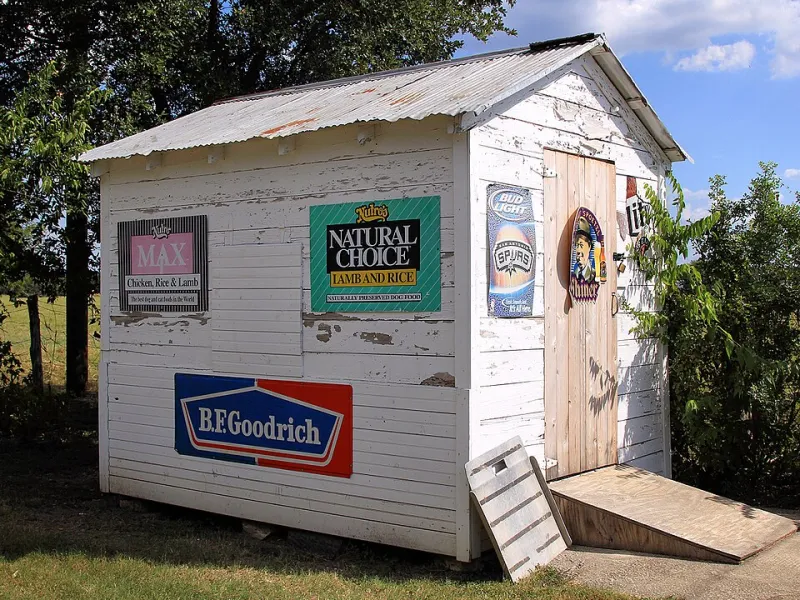
Photo: Larry D. Moore, CC BY 4.0, via Wikimedia Commons
The feed store is among the most unremarkable spaces in rural America. Bags of cracked corn line one wall; fencing spools and mineral tubs occupy the next aisle. Tucked into the same inventory, often with nothing more than a variety name and a germination rate, sit species that a veterinary toxicologist would flag without hesitation: Ipomoea tricolor and other morning glories whose seeds carry ergine, Argyreia nervosa sold as an ornamental curiosity, and forage mixes containing Phalaris arundinacea — reed canary grass — a tryptamine-bearing grass that thrives across the continental United States.
None of this is illegal, and that is precisely the point. The same characteristics that make these plants agronomically useful — hardiness, seed viability, ease of distribution — allow them to circulate through co-ops, catalogs, and garden centers with essentially no traceability. For the animals that live alongside the people who buy them, this creates an exposure landscape that the adverse-event surveillance systems discussed previously on this site have never adequately mapped.
A Supply Chain Designed for Anonymity
Agricultural distribution was never built to track pharmacology. Seed lots move from wholesale houses to regional co-ops to retail shelves, and at each step the product is identified by cultivar and purity — not by alkaloid content. A pound of Heavenly Blue morning glory seed at a Midwest farm supply retailer is indistinguishable, on paper, from a pound of any other ornamental vining seed.
This anonymity matters for two reasons. First, it means no point in the chain generates a record a veterinarian could consult after an exposure. Second, it means the risk profile of a product can change without anyone noticing: forage grasses vary in tryptamine expression by cultivar, season, and stress conditions, yet the bag on the shelf carries no indication of any of it.
The Forage Problem
Reed canary grass deserves particular attention. It is a legitimate, widely planted forage and conservation species, valued for its tolerance of wet soils and heavy grazing pressure. It is also, in certain strains, a documented source of indole alkaloids including dimethyltryptamine and 5-methoxy derivatives — concentrations influenced by genetics, nitrogen availability, and drought stress.
The clinical consequence is indirect but real. Horses and livestock grazing improved pastures, and companion animals drinking from or playing near drainage ditches choked with Phalaris, encounter a plant whose toxicity is variable, cultivar-dependent, and invisible to the person who planted it. Unlike a spilled pill bottle, there is no packaging to bring to the clinic — only a grass identification that may never be made.
Where the Exposures Actually Happen
Exposure pathways through the agricultural channel are more prosaic than the retreat-era narratives that dominate public attention:
- Direct seed ingestion by dogs, particularly retrievers and working breeds prone to dietary indiscretion around stored goods.
- Pasture and hay contamination, where psychoactive species volunteer into forage stands.
- Ornamental plant access, as nurseries distribute Datura, Brugmansia, and Argyreia with little more than a common name.
- Home propagation spillover, when a customer buys seeds for horticultural reasons and ends up cultivating them indoors alongside pets.
Each pathway shares a feature: the owner often does not know what the animal encountered, and the veterinarian has no supply-chain record to consult. The result is the diagnostic fog that clinical toxicology reporting has repeatedly described.
What Surveillance Advocates Are Asking For
The argument, advanced by veterinary toxicologists and public-health researchers alike, is not that these plants should be restricted. It is that the current system is asymmetric. A Schedule I compound in a laboratory requires IACUC oversight, chain-of-custody documentation, and inventory logs. The same pharmacologically active molecules, arriving via a seed packet, require nothing at all.
Reasonable interventions are modest: alkaloid-content labeling for high-risk forage cultivars, poison-center intake questions that distinguish agricultural from recreational exposure sources, and veterinary school curricula that teach practitioners to ask about feed-store purchases as routinely as they ask about medications. None of these require new statutes. All of them require acknowledging that the pipeline exists.
The Research Gap Widens
The bibliometric reviews published on this site have shown that animal psychedelic toxicology is thin to begin with. What exists clusters around laboratory models and case reports of deliberate exposures. The agricultural channel — the diffuse, seasonal, unintentional exposure of livestock and companion animals to tryptamine-bearing grasses and lysergamide-bearing seeds — is nearly absent from the literature, not because it does not occur, but because nobody is positioned to record it.
Closing that gap starts with something unglamorous: recognizing that the most consequential entheogen exposure route for American animals may run not through dark-web vials or grow tents, but through the ordinary bulk seed aisle, where the product has no warning label and the buyer has no reason to suspect one is needed.