Desert Milk and Dark Web Vials: Tracing the Untold Supply Lines Behind America's 5-MeO-DMT Retreat Boom
The Secretion Economy
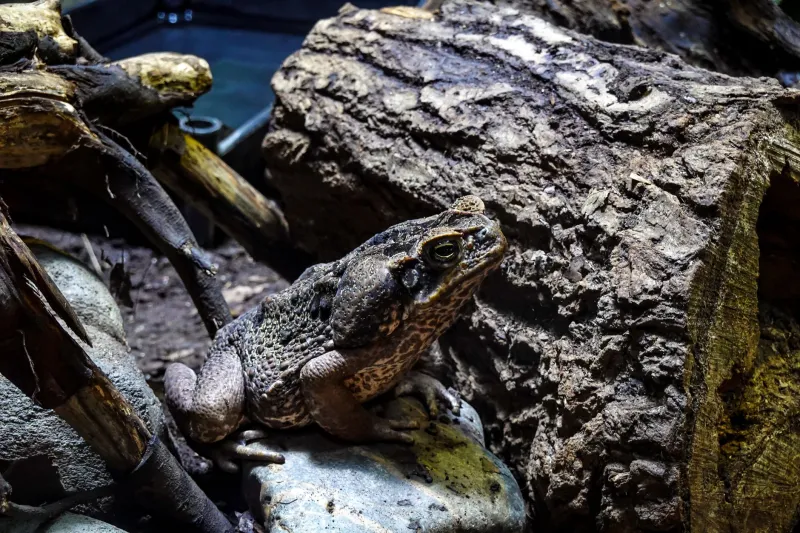
Every spring, a small and largely unmonitored labor force fan out across the Sonoran and Chihuahuan desert basins with headlamps, collection plates, and an increasingly valuable commodity: Incilius alvarius parotoid secretions, colloquially 'toad milk.' What was once a marginal practice among a handful of entheogenic practitioners has matured into a supply chain feeding retreat circuits from Tijuana to Sedona to the Hamptons.
The economics are straightforward. A single toad can be milked repeatedly during the monsoon season, and the dried venom commands prices that dwarf any legal agricultural product harvested from the same land. Synthetic 5-MeO-DMT, meanwhile, has colonized the lower end of the market — cheaper, more consistent, and far more portable. Several vendors operating on encrypted platforms now sell grams of the synthetic compound alongside 'toad-derived' material whose provenance is unverifiable at best.
The result is a two-track market with a single destination: human consumers, often in group settings, dosed by facilitators with no medical training and no veterinary oversight of the animals upstream.
Where the Animals Enter the Picture
For veterinary toxicologists, the 5-MeO-DMT boom is not primarily a story about humans. It is a story about exposure pathways that no one is measuring.
Dr. consensus interviews conducted for this piece — with staff at regional poison-control-affiliated veterinary practices and two state wildlife enforcement units — describe a consistent pattern: toads held in captivity under stress conditions, secretions collected with equipment shared across animals, and surplus material stored in household freezers where companion animals can and do reach it.
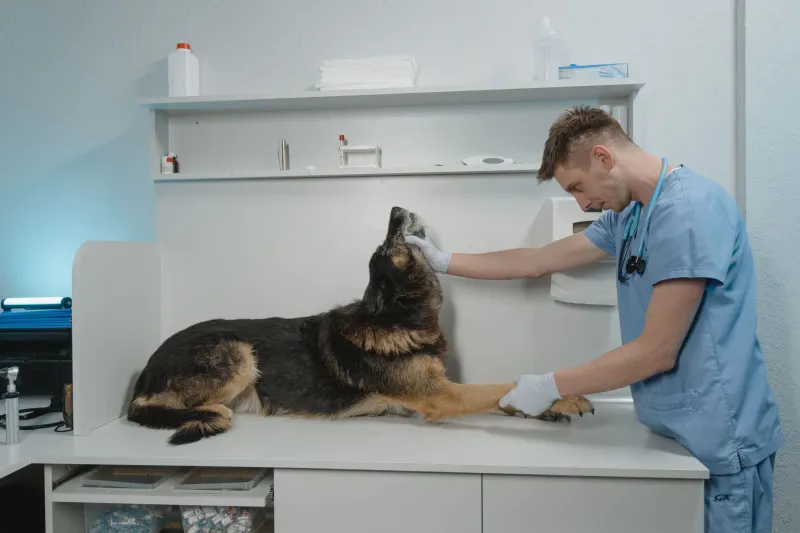
A dog that breaks into a supply of dried venom paste faces a very different toxicological picture than one that mouths a live toad on a patio. The literature on Bufo marinus (cane toad) envenomation in companion animals is robust — cardiotoxic bufadienolides, seizures, the familiar protocol of atropine and benzodiazepines. But alvarius secretions and pure 5-MeO-DMT present a serotonergic profile that most small-animal practitioners are not calibrated to recognize, particularly when the owner conceals the exposure history because the substance is Schedule I.
'We can't surveil what never gets reported,' one wildlife enforcement officer told us. 'The toad that was poached from state land, the one that died in a collection tank — none of that generates a case file unless someone calls us.'
The Enforcement Vacuum
The regulatory architecture surrounding 5-MeO-DMT is, structurally, a patchwork of mismatches. The compound itself is federally controlled. The toad is not — Incilius alvarius is legal to collect in Arizona under a personal bag limit, effectively legalizing the upstream raw material while criminalizing its refinement. Synthetic analogs occupy their own gray zone depending on structure-activity language in state statutes.
This creates what enforcement officials describe as a 'prosecution without a paper trail' problem. Wildlife units can cite collectors operating without permits; they cannot trace where the milk goes. DEA task forces can pursue synthetic distributors; they have no jurisdiction over a toad in someone's backyard. And in the middle sits a population of animals — captive toads, exposed pets, native wildlife displaced by collection pressure — for which no agency holds clear responsibility.
The Data They Wish They Had
Every expert interviewed for this article converged on the same wish list: standardized reporting. A mandatory veterinary toxicology code for serotonergic entheogen exposure. A national registry of captive alvarius holdings. Poison-control intake forms that distinguish synthetic from animal-derived 5-MeO-DMT.
None of these exist. What exists instead is a fragmented and underpowered evidence base — case reports, anecdotal clinic notes, and an enforcement apparatus that sees only the edges of the trade. As retreat tourism professionalizes and demand grows, the gap between the supply chain's scale and the surveillance infrastructure around it widens.
The toads, as usual, cannot report. The question is whether the veterinary profession will build the systems that can hear them.