From Knockout Mice to Cephalopod Brains: Six Animal Models Upending Psychedelic Pharmacology

Why Cross-Species Pharmacology Matters in the Clinic
The assumption that a drug acts the same way in a mouse, a dog, and a human is the quiet engine of veterinary therapeutics — and its most common failure point. Psychedelic compounds, with their heavy dependence on specific serotonin receptor subtypes and downstream signaling cascades, are an unusually sharp test of that assumption. The six models below, drawn from published research at US institutions and international collaborators, show why.
1. The 5-HT2A Knockout Mouse and the Vanishing Head Twitch
The head-twitch response (HTR) in rodents has served for decades as the standard behavioral proxy for hallucinogen-like activity. Studies of 5-HT2A receptor knockout mice demonstrated that deleting this single receptor abolishes the HTR to LSD, psilocybin, and DOI alike — anchoring the entire behavioral assay to one molecular target.
Veterinary implication: If a species expresses divergent 5-HT2A receptor density or affinity, behavioral readouts of psychedelic intoxication may be misleading. Clinical signs in exotic or avian patients could be absent even amid significant CNS exposure.
2. Rats, LSD, and the Ultradian Dosing Puzzle
Rodent studies examining repeated low-dose LSD administration found that tolerance to the HTR develops rapidly, yet anxiolytic-like effects in some paradigms persisted. The dissociation between behavioral tolerance and enduring effects complicates any simple translation of "microdosing" findings.
Veterinary implication: Chronic low-level exposure in companion animals — the scenario owners are increasingly attempting at home — cannot be assumed benign simply because acute toxicity is modest.
3. Zebrafish and the Emergence of High-Throughput Screening
Larval zebrafish, transparent and genetically tractable, have enabled whole-brain calcium imaging of serotonergic circuits under psychedelic exposure at institutions including NIH-supported neurodevelopment programs. These studies reveal rapid, receptor-specific remodeling of neural activity patterns within minutes.
Veterinary implication: Aquatic species may absorb tryptamines across gill surfaces, creating exposure routes entirely absent from mammalian toxicology models — a consideration for ornamental fish presented after aquarium "dosing" fads.
4. The Octopus Anomaly: Serotonin Signaling in a Divergent Brain
Cephalopod serotonin systems are evolutionarily distant from vertebrate paradigms, and emerging work on octopus neural signaling suggests receptor pharmacology that does not map cleanly onto mammalian classification. While rigorous psychedelic dosing studies in cephalopods remain scarce, the anomalous receptor biology is a standing caution.
Veterinary implication: For aquatic invertebrate patients, extrapolating mammalian psychedelic toxicology is essentially unsupported — a gap that comparative neurobiology labs could close with modest investment.
5. Macaques and the Neuroplasticity Question
Nonhuman primate studies, conducted under strict IACUC oversight at US primate research centers, have examined psilocybin's effects on cortical markers of neuroplasticity. Findings suggest conserved mechanisms across primates, strengthening translational confidence — while also raising the ethical stakes of such research.
Veterinary implication: Close phylogenetic relatives are the best — and most ethically fraught — models for predicting effects in humans, underscoring why refined rodent and zebrafish alternatives matter.
6. Canine Serotonin Receptor Genetics
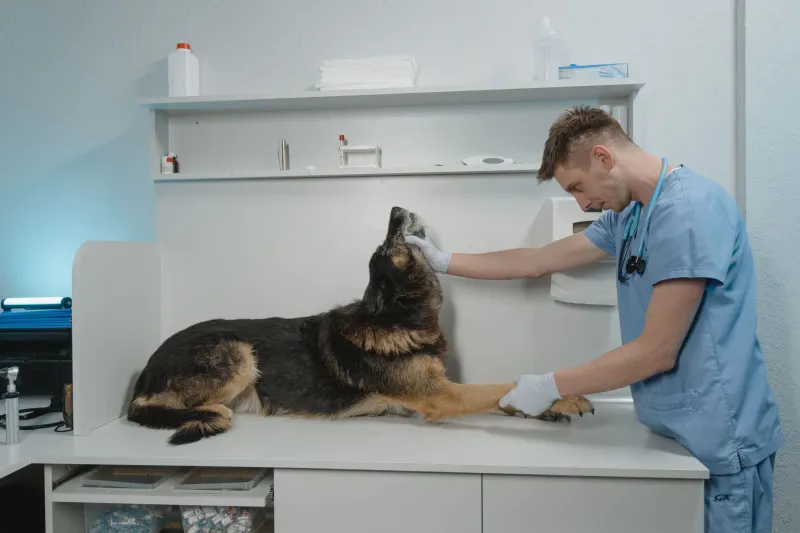
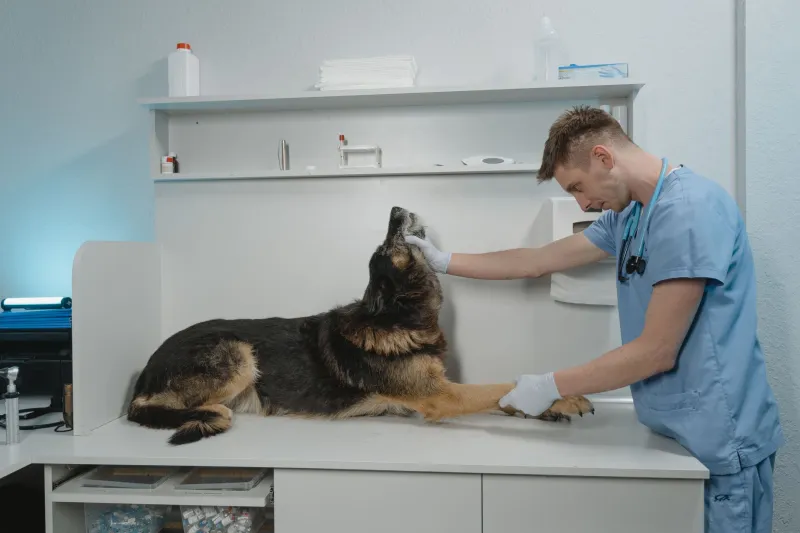
Breed-specific variation in canine serotonin receptor expression and transporter polymorphisms is an active area in veterinary pharmacogenomics. Given that dogs already occupy a central role in human anxiety-drug development, their variable serotonergic architecture makes them a natural — if ethically sensitive — comparative model.
Veterinary implication: If receptor polymorphisms predict psychedelic sensitivity in dogs, then owner-administered dosing carries unpredictable, breed-dependent risk. This is precisely the evidence base that veterinary pharmacology programs should prioritize before the practice outpaces the science.
Open Questions for US Academic Labs
Three gaps stand out: validated dose-response data in companion mammals; behavioral assays that do not rely on rodent-specific proxies like the HTR; and basic receptor pharmacology in non-mammalian patients. Each is fundable, publishable, and increasingly urgent. The molecules are already circulating. The question is whether the science — and the veterinary profession — will be ready before the next patient arrives.