Serotonin, Species, and Wishful Thinking: What Veterinary Medicine Should — and Shouldn't — Take from Psychedelic Drug Development
The psychedelic renaissance has produced more than clinical trials. It has generated an enormous body of fine-grained pharmacological data — receptor affinity profiles, metabolite characterization, drug interaction maps — that veterinary pharmacologists are beginning to mine. Some of this borrowing is genuinely promising. Some of it is dangerous. Here is our accounting of both.
What's Worth Borrowing
1. High-Resolution Receptor-Binding Data in Canine Models
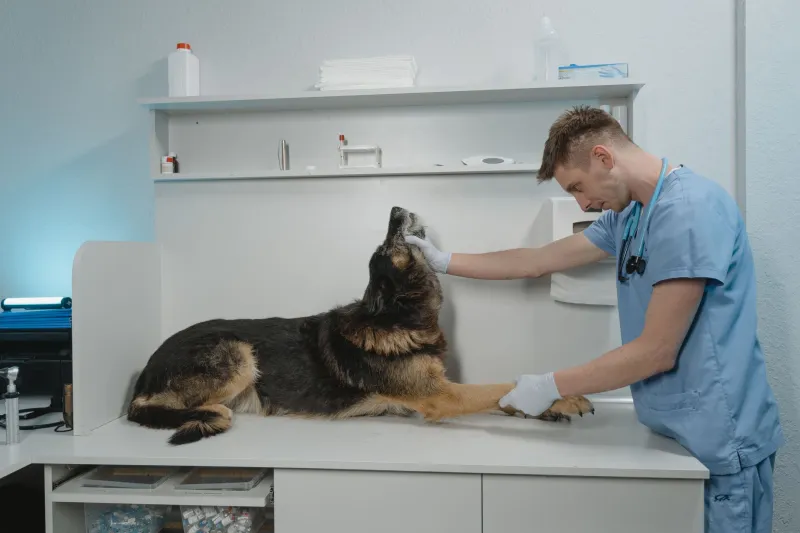
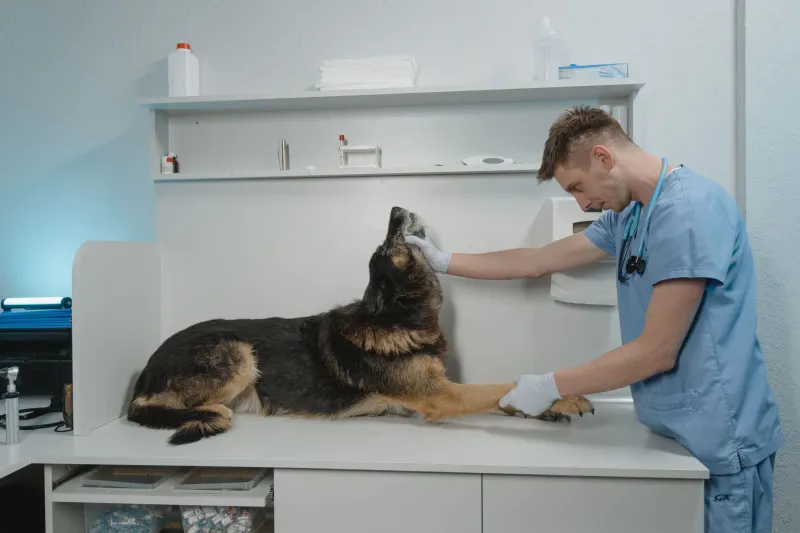
Dogs share substantial serotonergic system homology with humans, and the psychedelic literature's dense 5-HT receptor characterization has sharpened veterinary understanding of drugs like trazodone and buspirone — staples of canine behavioral medicine. Better binding profiles mean better dosing rationale, replacing empirical titration with mechanism-informed prescribing.
2. Serotonergic Interaction Screening for Exotic Animal Medicine
Avian and reptilian practitioners have long observed serotonin syndrome–like presentations after accidental exposure or polypharmacy. The human psychedelic field's interaction frameworks — MAOI warnings, SSRI stacking risks, cytochrome P450 considerations — offer a ready-made screening logic for exotic patients where pharmacokinetic data is scarce. Parrots on SSRIs with dietary tyramine exposure is not a hypothetical; the screening tools to catch it now exist.
3. Metabolite Awareness
Psychedelic research has been meticulous about active metabolites — psilocin from psilocybin, the nuances of ketamine's metabolite cascade. That rigor is migrating into veterinary toxicology, improving how clinicians interpret exposure cases in companion animals, including the increasingly common ingestion of a client's psychedelic stash.
4. Microdose-Informed Chronic Dosing Debates
Chronic low-dose serotonergic protocols in rodent models have prompted veterinary behaviorists to re-examine long-term SSRI and anxiolytic regimens in dogs — specifically, whether behavioral monitoring captures functional changes we've been missing.
5. Analytical Chemistry Capacity
The boom in psychedelic testing has expanded US lab capacity for detecting serotonergic compounds in biological matrices. Veterinary diagnostic labs benefit directly when a presenting patient has unknown exposure history.
Where Extrapolation Becomes a Hazard
1. Assuming Subjective Effects Translate
The single greatest risk in this cross-pollination is anthropomorphic projection. A psychedelic's therapeutic value in humans may run through conscious experience — insight, emotional processing, mystical-type states. We have no validated method to assess whether a dog, a parrot, or a horse undergoes anything functionally similar. Administering a serotonergic hallucinogen to an animal patient and calling it therapeutic, because it looks therapeutic in humans, substitutes wishful thinking for pharmacology. Preclinical animal models exist to measure receptor occupancy and behavior — not to receive psychedelic therapy.
2. Direct-to-Consumer Spillover
As psilocybin decriminalizes in Oregon, Colorado, and a growing list of states, some owners will inevitably dose their animals. Veterinary clinicians should expect presentation cases and should be prepared with the interaction-screening frameworks above — but the profession should resist any drift toward prescribing these agents off-label on the strength of human enthusiasm alone.
3. Receptor Homology as Proof of Equivalence
Binding affinity in one species does not establish behavioral or subjective equivalence in another. Rodent head-twitch response is a proxy, not a translation. When a novel serotonergic compound shows promise in a mouse assay, that is a starting point for veterinary investigation — not a license for clinical use in a veterinary patient.
The Bottom Line
The psychedelic renaissance has handed veterinary pharmacology better tools than it has ever had for understanding serotonergic drugs. The tools are welcome. The therapeutic claims, however, must earn their way across species lines the hard way — through species-specific evidence, welfare-centered review, and humility about what we cannot know about another animal's inner life. Patients deserve medicine, not metaphor.