Reading the Roadkill Ledger: What Wildlife Necropsy Data Quietly Says About Entheogenic Exposure
The deer arrives at the state pathology laboratory with a familiar story: found dead near an agricultural margin, no obvious trauma, the reporting hunter or homeowner unsure what, if anything, the animal had gotten into. Routine panels run. Organ weights recorded. Histopath slides filed. And then, in a growing number of cases across the US, an incidental finding surfaces that doesn't fit the template — lysergamide-positive morning glory seed material in gastric contents, or mescaline-range phenethylamine residues in an animal that had been foraging through composted ornamental cacti.
These are not the findings wildlife toxicology was built to look for. But necropsy databases — the vast, under-mined archives of state diagnostic laboratories, university veterinary teaching hospitals, and the USGS National Wildlife Health Center — are beginning to suggest that they occur more often than anyone has systematically counted.
An Archive Built for Other Questions
Wildlife necropsy infrastructure in the United States was largely designed around infectious disease surveillance, lead and rodenticide toxicosis, and mortality events affecting game or endangered species. Screening menus reflect that history: organophosphates, anticoagulant rodenticides, avian influenza, chronic wasting disease. Psychoactive plant alkaloids appear on almost none of the standard panels.
That omission is not necessarily an oversight so much as an artifact of probability. Until recently, the likelihood that a diagnostician would encounter dimethyltryptamine or lysergamide residues in a free-ranging raccoon seemed low enough that testing for it was difficult to justify against budget realities. Mass spectrometry time is expensive, and targeted assays require a reason to run them.
The result is a classic surveillance blind spot: a class of exposures that cannot be quantified because it is rarely sought, and rarely sought because it has never been quantified.
Plausible Pathways, Documented Anecdotes
The exposure routes, when sketched out, are unremarkable — which is precisely why they deserve attention. Free-ranging wildlife routinely exploits anthropogenic food sources. Compost heaps accumulate discarded garden clippings, including Trichocereus and other ornamental cacti containing mescaline. Seed mixes and bird feed formulations have been anecdotally contaminated with Ipomoea or Argyreia material. Retreat-center waste streams in regions like the Sonoran Desert periphery and the Catskills raise parallel questions about discarded plant matter and synthesis byproducts.
Secondary exposure adds another layer. A scavenger consuming the carcass of an animal that had consumed psychoactive plant material ingests whatever alkaloids persisted through decomposition — a pathway well documented for rodenticides and pharmaceuticals, and pharmacologically plausible for compounds like the phenethylamines and ergoline alkaloids, though largely unstudied.
Diagnostic networks have flagged enough of these cases informally — in listserv discussions, at regional diagnostic laboratory meetings, in the margins of necropsy reports — that the question is shifting from could this happen to how often is it happening, and what are we failing to record?
What the Databases Do and Don't Capture
The structural problem is one of indexing. A laboratory information system may record "gastric contents: plant material, unidentified" without any downstream mechanism for aggregating those entries when an incidental confirmatory test comes back positive for an ergoline alkaloid. Findings live in free-text fields, PDFs, and the memories of the pathologist on the case.
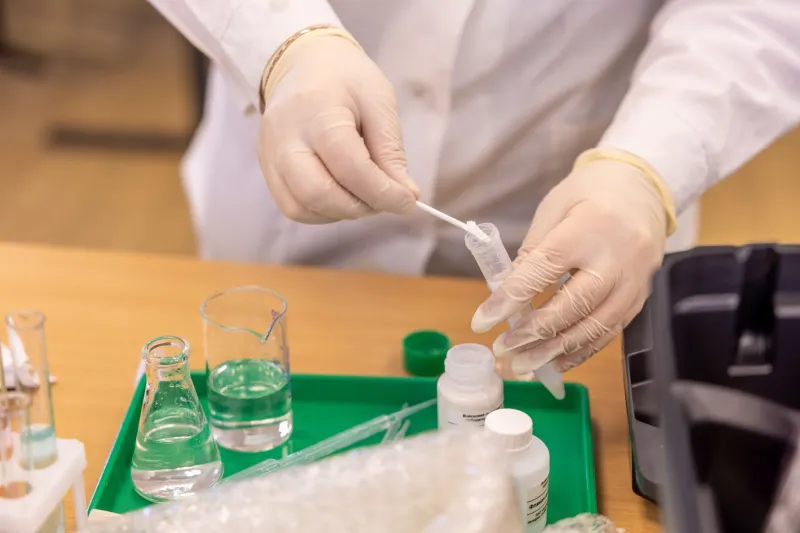
Efforts to change this remain embryonic. Some university diagnostic labs with broader untargeted LC-MS/MS capability can run retrospective screens on archived tissue and content samples — work that mirrors the wastewater-based epidemiology approach now standard in human public health. A small number of wildlife disease cooperatives have discussed adding entheogenic compounds to expanded toxicology panels for urban-adapted species such as raccoons, coyotes, and white-tailed deer, which function as de facto biomonitors of the human-food interface.
The methodological hurdles are real. Plant alkaloid concentrations in forage vary enormously; post-mortem redistribution and degradation complicate interpretation; and distinguishing a behaviorally significant exposure from an incidental dietary trace is a pharmacokinetic problem no one has yet solved for a deer. Reference ranges, in the meaningful sense, do not exist.
Why It Matters Beyond Curiosity
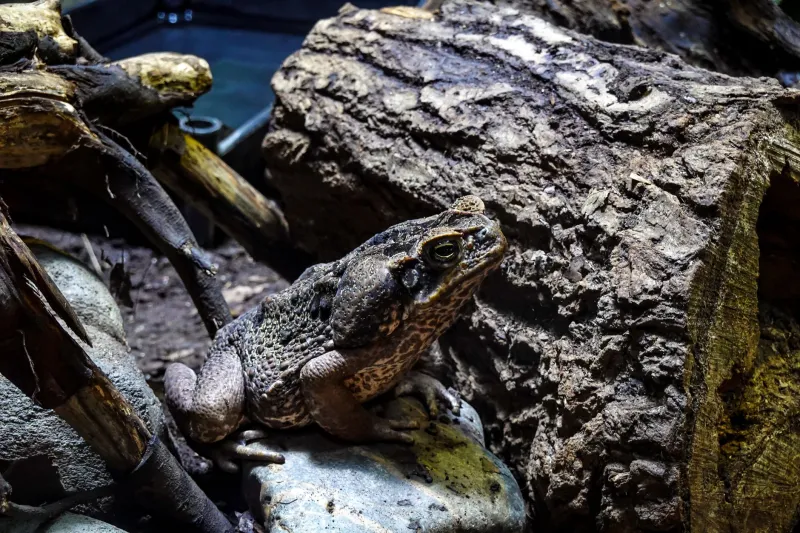
Three stakes justify the effort. First, wildlife is a sentinel: systematic detection of psychoactive compound residues in free-ranging animals would map where cultivation, disposal, and retreat-industry activity intersect with wild habitat — data relevant to conservation agencies tracking everything from illegal Bufo alvarius collection to illicit grow operations on public land.
Second, there is the animal welfare dimension. Behavioral toxicosis in wildlife is nearly impossible to observe and rarely survivable to document; serotonergic compounds carry known risks of hyperthermia and predation impairment in mammals. If exposures are frequent enough to register in necropsy data at all, the sublethal toll may be considerably larger.
Third, there is a comparability argument. Human psychedelic epidemiology has benefited enormously from infrastructure — poison control data, wastewater monitoring, emergency department coding. Wildlife toxicology has no equivalent. Building even a modest flagging convention into existing necropsy workflows would create, at low cost, the first longitudinal dataset on environmental entheogen exposure in North American fauna.
A Modest Proposal for a Young Subfield
The recommendations that follow from this picture are unglamorous: add a small entheogen panel to expanded toxicology screens in urban-interface species; standardize reporting fields for psychoactive compound findings across regional diagnostic networks; and encourage retrospective screening of archived samples where untargeted instrumentation already exists.
None of this requires new science so much as a decision to look. The necropsy files are already being written, case by case. The only question is whether anyone will read them for what they can — and cannot — say about a class of compounds that wildlife medicine has, until now, preferred not to imagine on the menu.