Anesthetic by Day, Entheogen by Night: The Legal Gray Zone Around Veterinary Ketamine Prescribing

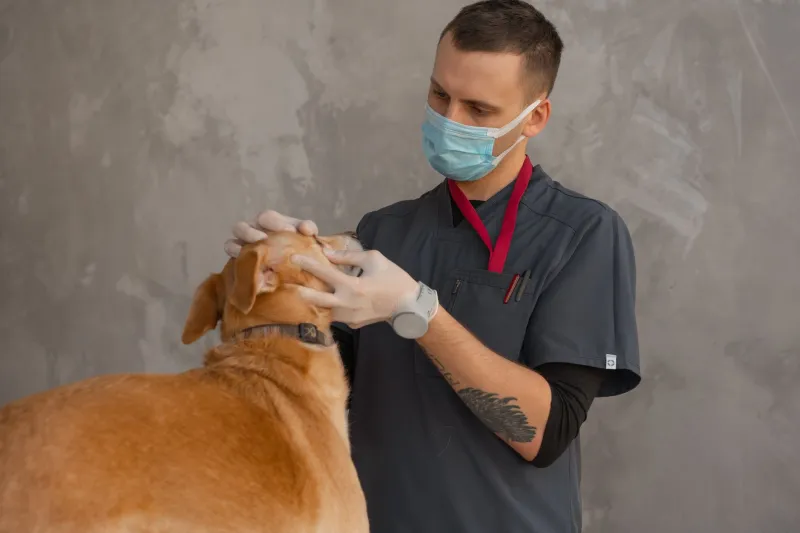
Photo: veterinarian preparing ketamine syringe in animal clinic, via c8.alamy.com
Every day in American veterinary clinics, ketamine is drawn into syringes without a second thought. It is a staple of small animal induction, a workhorse in equine field anesthesia, and a mainstay of exotic animal protocols. Legally, none of this is controversial: ketamine sits on Schedule III, is explicitly approved for veterinary use, and appears in every accredited veterinary curriculum.
What is controversial — or at least uncharted — is everything happening at the margins of that clinical routine. Human medicine has spent the past decade rebranding ketamine as a rapid-acting antidepressant, with off-label clinics proliferating across states like California, Colorado, and New York. Esketamine gained FDA approval for treatment-resistant depression in 2019. And as the psychedelic renaissance accelerates, owners are beginning to ask the obvious question: if this drug can alter consciousness therapeutically in people, what about their dogs, their horses, their parrots?
The honest answer from veterinary medicine is that nobody knows — and, more troublingly, nobody has built the regulatory scaffolding to find out.
Where the Authority Ends
Under the Controlled Substances Act, a DEA-registered veterinarian may prescribe ketamine for legitimate veterinary purposes. But "legitimate purpose" is doing enormous work in that sentence. The Food and Drug Administration's Center for Veterinary Medicine has approved ketamine as an anesthetic, not as a psychotropic intervention. Prescribing it — or an analog like methoxetamine or any of the arylcyclohexylamine cousins circulating in research supply chains — for a putative behavioral or mood indication would be an off-label use, which is itself permitted under the Animal Medicinal Drug Use Clarification Act, but only within a valid veterinarian-client-patient relationship and only when supported by reasonable evidence.
That is where the framework collapses. There is no published evidence base for dissociative or entheogenic dosing in companion animals for psychiatric indications. There are no validated outcome measures for whether a beagle "processed" a dissociative experience. There are no consensus guidelines from the AVMA, no position papers from the American College of Veterinary Anesthesia and Analgesia addressing sub-anesthetic psychedelic-adjacent dosing, and no state board guidance distinguishing anesthetic use from anything else.
Legal scholars who track controlled substance practice note that this silence is not neutrality. In the absence of clear standards, enforcement risk shifts onto individual practitioners. A veterinarian who doses a reactive dog with sub-anesthetic ketamine for "behavioral support" is relying on the same discretionary space that covers countless off-label uses — but with a drug whose cultural profile now invites scrutiny that amoxicillin never faced.
The Analog Problem
Ketamine's cousins complicate the picture further. Several structural analogs with documented hallucinogenic activity in humans exist in a gray market of research chemical suppliers, and at least one — deschloroketamine among them — has appeared in toxicology case reports in pets after accidental exposure. For a practitioner, the distinction between a legally prescribable anesthetic and a federally unscheduled analog with unknown veterinary pharmacokinetics is not always intuitive, and the DEA's Analogue Act creates liability exposure that many clinicians have never been trained to navigate.
Interviews with veterinary anesthesiologists reveal a consistent position: the profession's pharmacological comfort with ketamine does not extend to its analogs, and it certainly does not extend to sub-anesthetic psychotropic dosing protocols borrowed from human clinics without species-specific validation.
What a Framework Might Require
If demand arrives — and the trajectory of human psychedelic medicine suggests it will — a responsible prescribing framework would likely need several elements that currently do not exist. First, species-specific pharmacokinetic and behavioral data establishing what sub-anesthetic dosing actually does across taxa, since dissociation in a prey species like a horse may be profoundly different, and far more welfare-negative, than in a predator. Second, formal position statements from professional bodies delineating when such use falls within legitimate veterinary practice. Third, explicit adverse event reporting pathways, so that the field's experience does not disappear into the same reporting void that already obscures entheogenic plant exposures in pets.
Some ethicists argue the profession should be proactive rather than reactive. The history of veterinary CBD is instructive: owner demand raced ahead of the evidence, the regulatory response was chaotic, and animals absorbed the consequences of the confusion. Ketamine's psychedelic moment offers a rare opportunity to build the framework before the market builds it instead.
Before the Prescription Pad
None of this argues that ketamine's entheogenic potential in animals should be dismissed. Comparative neuroscience has legitimate reasons to ask whether dissociative compounds might illuminate pain, anxiety, or consciousness across species. But there is a difference between a research question governed by IACUC oversight and a prescription written at the front desk because an owner read about ketamine clinics online.
Until the profession, its regulators, and its researchers close that gap, the safest position is also the most honest: ketamine's anesthetic use is settled science, but its psychedelic-adjacent use in animals is an ethical and legal frontier that deserves a framework before it deserves a prescription.