A Century Before LSD: How Livestock Veterinarians Mapped Serotonin Receptor Toxicology in the Feed Bunk
In 2019, a researcher at a US university presenting on 5-HT2A receptor agonism described the vascular effects of serotonergic hallucinogens as an emerging concern. In the back of the room, a large-animal veterinarian reportedly raised a hand and noted that her profession had been managing exactly those vascular consequences — in dairy herds — since the 1850s. The exchange captures a peculiar blind spot in psychedelic science: a vast, century-deep literature on ergot alkaloid toxicology sits in agricultural extension bulletins and veterinary pathology journals, largely unread by the laboratory researchers now probing serotonergic pharmacology.
The Original Serotonin Receptor Agonists
Ergot alkaloids — the lysergic acid derivatives produced by Claviceps purpurea and related fungi — are, pharmacologically speaking, the founding members of the serotonergic agonist class. Albert Hofmann's seminal work on LSD emerged directly from ergot chemistry, a lineage psychedelic researchers acknowledge in passing. What receives far less attention is the applied toxicology: the accumulated clinical experience of veterinarians who have diagnosed fescue toxicosis, ergotism, and related alkaloid poisonings in American livestock for generations.
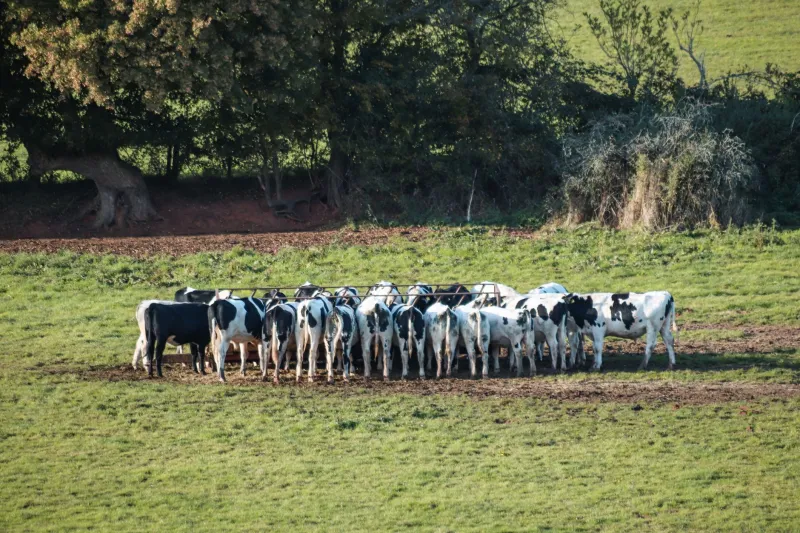
The syndrome is well characterized in the agricultural literature. Persistent vasoconstriction driven by alkaloid agonism at vascular serotonin receptors produces the classic progression: lameness, loss of tail tips and ear margins to dry gangrene, heat intolerance in cattle on endophyte-infected fescue pastures across the Southeast and Midwest, and dramatic drops in milk production and reproductive performance. These are, in essence, population-scale adverse event data for 5-HT receptor agonism — collected in the field, across decades, in thousands of animals.
What the Extension Bulletins Know
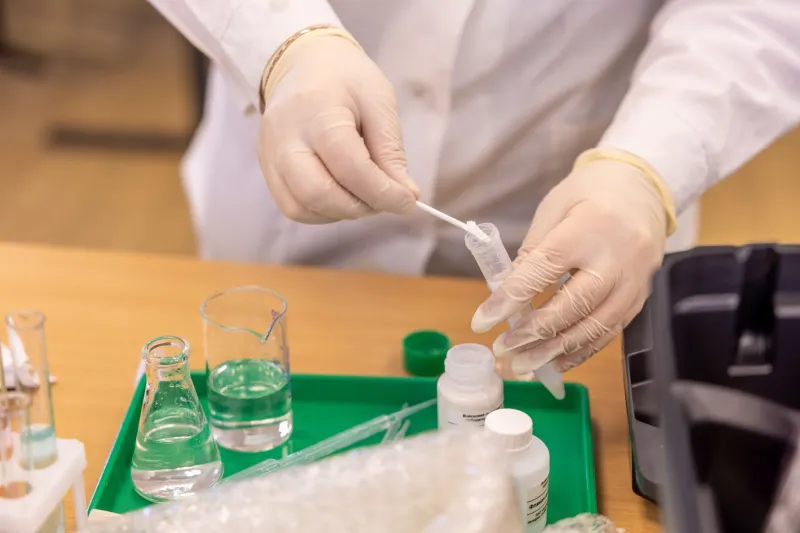
Agricultural extension services — the land-grant university system's outreach arm — have produced a remarkably detailed practical literature on these syndromes. Kentucky and Tennessee extension programs have documented fescue toxicosis in beef cattle for decades; dairy specialists in Wisconsin and Minnesota track alkaloid-related production losses; veterinary toxicology labs at state diagnostic centers routinely quantify ergot alkaloid concentrations in feed samples using liquid chromatography-tandem mass spectrometry.
Several threads of this knowledge deserve attention from psychedelic researchers:
-
Dose-response variability across species. The agricultural literature is dense with comparative data: horses, cattle, sheep, and goats differ substantially in their sensitivity to ergot alkaloids, with documented mechanisms including ruminal detoxification and differences in vascular receptor density. This is precisely the kind of interspecies pharmacodynamic variation that translational psychedelic research struggles to model.
-
Chronic, low-dose exposure effects. Where human psychedelic research focuses on discrete, controlled doses, livestock toxicology has exhaustively documented the consequences of subacute, continuous exposure — hyperthermia, reproductive dysfunction, poor weight gain. For any researcher considering repeated-dose regimens of serotonergic agonists, this represents an extensive natural experiment.
-
Vascular risk stratification. Field veterinarians learned long ago that environmental heat, concurrent stress, and nutritional status dramatically modulate alkaloid toxicity. The hot-humid conditions of a Georgia summer turn marginal fescue alkaloid loads into clinical emergencies. These interaction effects — drug, climate, physiology — are poorly represented in laboratory paradigms but central to real-world risk.
Diagnostic Medicine as a Model System
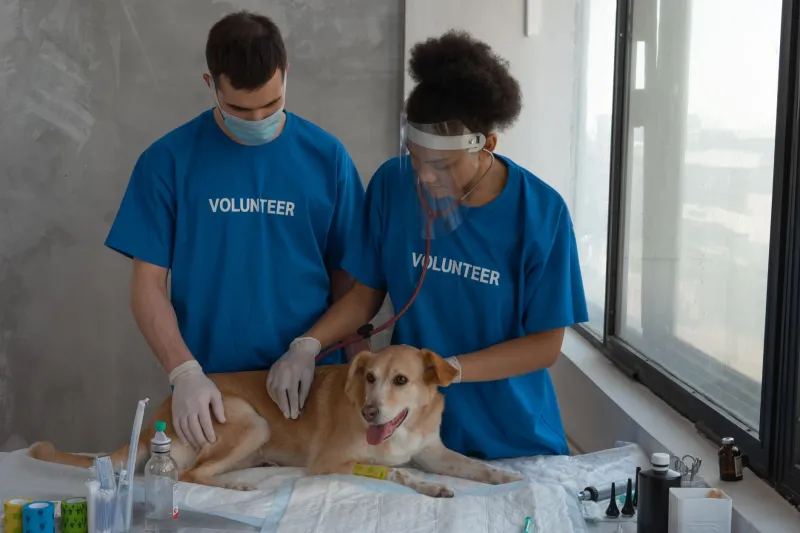
There is also a methodological lesson. Livestock toxicology never had the luxury of subjective self-report. Diagnosis rests on production records, clinical signs, feed analysis, and necropsy findings — an entirely objective, behavior- and physiology-based framework for identifying serotonergic agonist toxicity. As psychedelic science confronts the challenge of measuring compound effects in animals that cannot describe their experiences, the veterinary toxicology playbook offers validated, non-verbal endpoints: thermoregulation, peripheral perfusion, locomotion scoring, reproductive indices.
Diagnostic laboratories associated with US veterinary schools — the Cornell Animal Health Diagnostic Center, the Texas AVM Veterinary Medical Diagnostic Laboratory, and their counterparts across the country — have spent decades refining analytical methods for alkaloid detection in complex biological matrices. Those methods transfer, with adaptation, to the analytical challenges psychedelic researchers face in biological samples.
The Institutional Memory Problem
Why has this literature gone largely uncited in psychedelic science? The answer is partly structural. Agricultural toxicology is published in venues — the Journal of Animal Science, extension bulletins, veterinary pathology proceedings — that sit far outside the citation networks of psychopharmacology. The two fields share a molecule and a receptor but almost no readership.
The cost of this separation runs in both directions. Psychedelic researchers designing safety studies for novel serotonergic agonists reinvent frameworks that livestock toxicologists solved generations ago. Meanwhile, veterinary practitioners confronting the occasional companion-animal exposure to lysergic acid amides — in morning glory seeds, Hawaiian baby woodrose, or contaminated grain — lack access to the psychedelic research community's receptor-level understanding of what such exposures do.
Building the Bridge
A modest proposal follows from this survey: psychedelic research programs should include veterinary toxicologists, particularly those with feed-related alkaloid expertise, on their safety and translational teams. Land-grant universities — institutions that house both agricultural experiment stations and growing psychedelic research centers — are natural venues for this collaboration. Several already employ faculty whose careers have been spent quantifying serotonergic agonist toxicity in living animals, at population scale, without a single human subject.
The ergot literature will not answer the questions psychedelic science cares most about: subjective experience, therapeutic mechanism, consciousness. But for the unglamorous work of toxicology — dose thresholds, species variation, vascular safety, chronic exposure — a century of feed-bunk pharmacology has already run the experiments. It would be a strange kind of scientific amnesia to run them again.