Amphibians at the Margins: What the 5-MeO-DMT Boom Means for the Sonoran Desert Toad
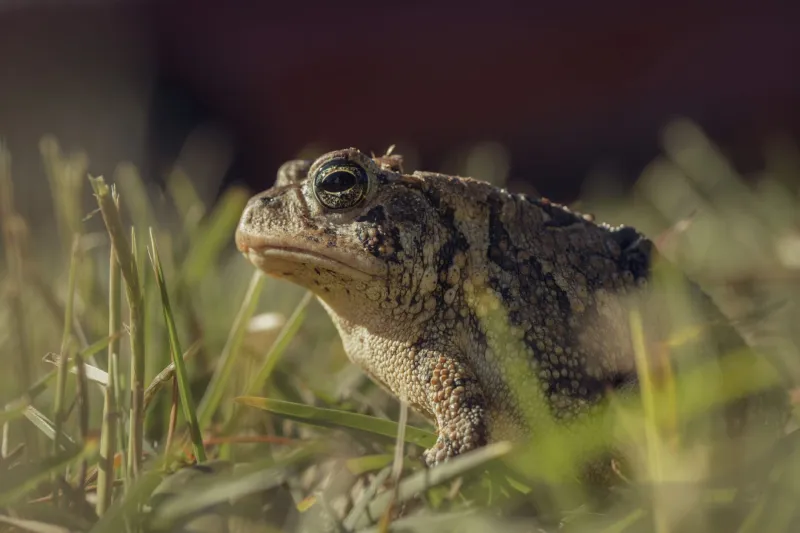
The Colorado River toad (Incilius alvarius), also called the Sonoran Desert toad, occupies an unusual position in contemporary psychedelic culture. It is the only North American amphibian whose parotoid glands secrete 5-MeO-DMT in meaningful quantities, and it is increasingly treated as a renewable resource by harvesters, retreat operators, and private collectors. What the popular narrative rarely asks is a question veterinary and wildlife science is well positioned to answer: what does harvesting do to the animal?
A Growing Extraction Economy
Interest in smoked toad venom intensified after media coverage and celebrity endorsements in the late 2010s, and harvest pressure in Arizona and Sonora has risen accordingly. Unlike synthetic 5-MeO-DMT, which is chemically identical and requires no animals, the toad-derived product carries cultural cachet that sustains a market. Arizona Fish and Game officials have issued public statements warning against collection, noting that the species is protected from collection in the state, yet enforcement across remote desert terrain remains difficult.
In Mexico, the species has been assessed as threatened, and researchers there have documented declining populations in areas of concentrated harvesting. US populations are not federally protected, leaving a patchwork of state rules that treat the toad as neither livestock nor wildlife in any coherent sense.
What Stress Physiology Suggests
Amphibian welfare science is young, but its foundational findings are relevant. Capture, handling, and confinement elevate corticosterone in anurans, and repeated milking of defensive secretions — which evolved as a predation response — plausibly constitutes an acute stressor. Dehydration risk is significant: toads harvested from burrows and transported to harvesting events may spend hours in dry containers before and after milking. Skin integrity matters too, since amphibians rely on cutaneous respiration and are vulnerable to contamination and abrasion during handling.
Herpetologists interviewed for this article emphasized that no peer-reviewed protocol exists for humane, repeat harvesting. Mortality among captive-held toads is widely reported anecdotally but poorly documented — a data gap that itself reflects the absence of institutional oversight.
The Regulatory Gap
Under the Animal Welfare Act, toads fall outside the definition of regulated animals. IACUC review applies only to research use, not commercial harvesting. State wildlife agencies regulate possession, not welfare. The result is a supply chain in which no authority is responsible for the animal's experience — a familiar pattern for readers of this site, and one that the entheogenic trade has largely inherited unexamined.
Where Ethics Frameworks Should Begin
A defensible welfare standard would require, at minimum: synthetic substitution as the default; any animal-derived harvesting conducted under veterinary supervision with defined handling, hydration, and recovery protocols; and population monitoring to prevent localized depletion. Retreat operators marketing toad venom have an ethical obligation to disclose provenance; "wild-harvested" should be understood by consumers as a welfare and conservation red flag, not a selling point.
The toad did not volunteer for this role in human ritual. As the psychedelic field matures, extending even minimal welfare accounting to the nonhuman participants in the entheogenic economy is not sentimentality — it is the same ethical consistency the field demands elsewhere.